

Every home chef knows the importance of a sharp knife. But when it comes to sharpening, the question often arises: what angle should it be? It’s like trying to find the sweet spot between a firm handshake and a bone-crushing grip. Get it wrong, and you might as well be trying to slice tomatoes with a butter knife!
The right angle can transform a dull blade into a precision instrument, making meal prep a breeze. Whether you’re a culinary novice or a seasoned pro, understanding the ideal sharpening angle can elevate your cooking game. So grab your whetstone and let’s dive into the world of knife angles—because nobody wants to face the wrath of a rogue carrot.
Understanding Knife Angles
Understanding knife angles is essential for achieving optimal sharpness. The right angle enhances cutting efficiency and knife performance.
Importance of Sharpening Angle
The sharpening angle significantly impacts a knife’s cutting ability. A sharper edge allows for smoother slicing and less resistance. Incorrect angles can lead to dull blades, which requires more effort to cut through food. Maintaining the appropriate angle reduces the risk of damaging the blade or producing poor results. For home chefs, knowing this ensures a safer and more effective cooking experience.
Common Sharpening Angles for Kitchen Knives
Common sharpening angles vary based on knife type and intended use. Chef knives typically range from 20 to 22 degrees for balanced versatility. Japanese knives often feature angles between 15 and 18 degrees for precision cutting. Paring knives generally are sharpened at angles of 20 degrees, ensuring they handle small tasks effectively. Knives used for serrations possess varying angles, tailored for specific cutting applications. Understanding these angles aids chefs in selecting the correct sharpening technique for their tools.
Factors Influencing Sharpening Angles
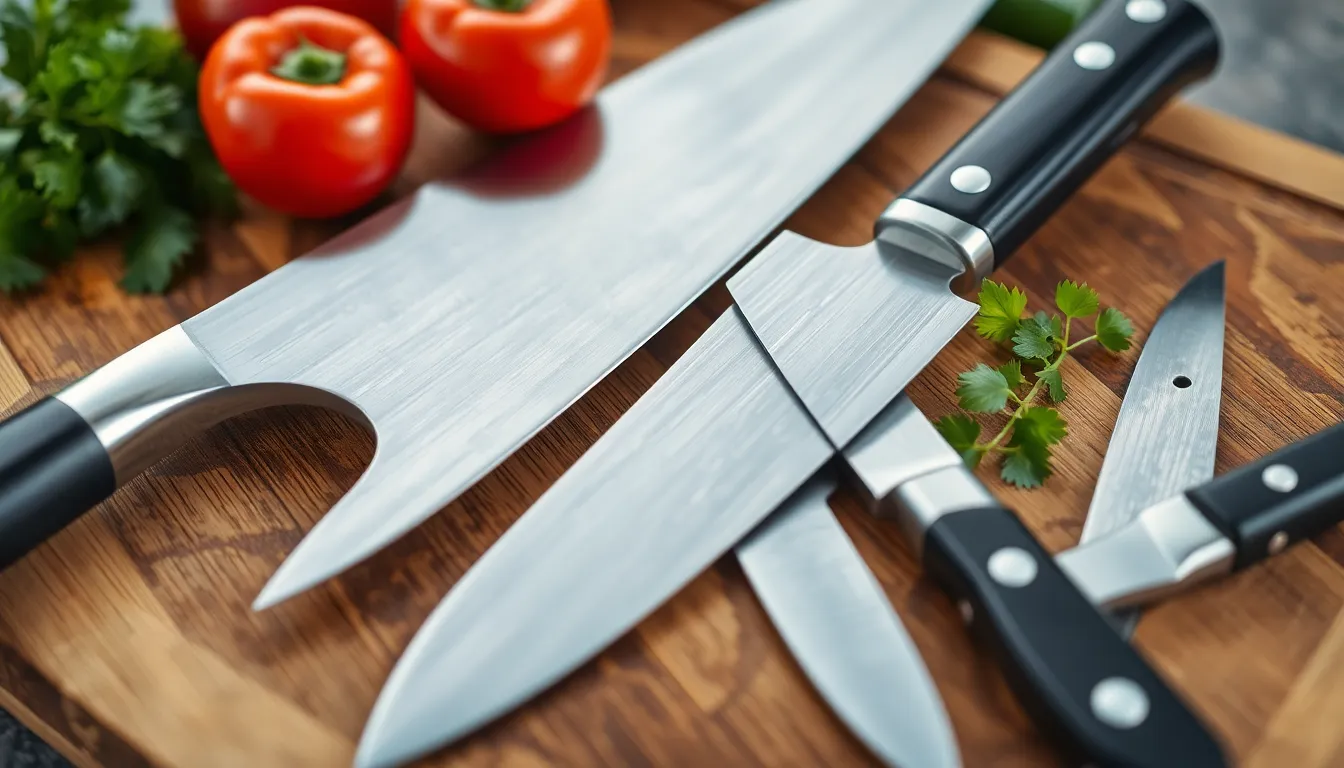
Sharpening angles influence knife performance and depend on various factors. Knowing these aspects helps ensure optimal sharpness for every kitchen tool.
Type of Kitchen Knife
Different types of kitchen knives require specific sharpening angles for best results. Chef knives usually benefit from angles between 20 to 22 degrees, striking a balance between sharpness and durability. Japanese knives, known for their precision, often are sharpened at angles ranging from 15 to 18 degrees, allowing for finer cuts. Paring knives typically operate well at around 20 degrees, enabling detailed work. Material also plays a role; high-carbon stainless steel blades often can handle sharper angles compared to softer metals. Selecting the right sharpening angle for the specific knife type enhances overall cutting efficiency and effectiveness in the kitchen.
Purpose of the Knife
The intended use of a knife significantly influences its sharpening angle. Knives meant for slicing through tougher ingredients, like meats or squash, often need sharper angles to reduce pressure during cuts. A utility knife designed for various tasks may require a more robust angle, such as 20 to 22 degrees, to maintain durability. Specialty knives, like filleting or boning knives, may necessitate sharper edges at 15 to 18 degrees for precision tasks. Understanding the knife’s purpose aids in determining the optimal angle, allowing cooks to achieve desired results with less effort.
Techniques for Sharpening Kitchen Knives
Achieving a sharp knife involves various techniques, each suited to different types of kitchen knives.
Using a Whetstone
Utilizing a whetstone is a traditional method that provides excellent control over the sharpening process. A chef should select a whetstone with a grit appropriate for their knife’s condition; a coarser grit effectively repairs damage, while a finer grit refines the edge. To use a whetstone, place it on a stable surface, and wet it with water or oil. Holding the knife at the desired angle, draw the blade across the stone with consistent pressure. Alternate sides after a few strokes to maintain balance. This technique fosters a razor-sharp edge while allowing for precision.
Employing a Sharpening Rod
Employing a sharpening rod offers a quick way to maintain knife sharpness between deeper sharpening sessions. A cook can use a ceramic or steel rod, catering to their knife type. To begin, hold the rod vertically and position the knife at a 20-degree angle against the rod. Sweep the blade down the rod’s length, alternating sides with every few strokes. This method aligns the edge and removes any burrs, ensuring smooth cutting. Regular use of a sharpening rod helps sustain a knife’s performance without excessive wear.
Choosing the Right Angle for Your Needs
Selecting the appropriate sharpening angle enhances knife performance and efficiency. Various factors influence the choice of angle, including knife type and intended use.
General Guidelines
Chef knives typically require an angle between 20 to 22 degrees, ensuring versatility across multiple tasks. Japanese knives often rest at 15 to 18 degrees, promoting finesse for precise cuts. Paring knives generally maintain an angle around 20 degrees, suitable for intricate work. The edge’s sharpness impacts cutting ease; sharper edges streamline slicing while blunt ones induce more resistance. Understanding these guidelines aids cooks in achieving optimal performance and safety in the kitchen.
Personal Preferences
Individuals may prefer different angles based on their cooking style and comfort level. Some chefs gravitate toward sharper angles for delicate tasks, favoring precision in presentation. Others appreciate broader angles for durability, particularly when handling tougher ingredients. Personal experience significantly influences preferences, making it essential to find an angle that feels right. Experimentation with various angles allows for tailored sharpening techniques that meet unique cooking needs.
Choosing the right angle to sharpen kitchen knives is crucial for enhancing performance and efficiency in the kitchen. It not only affects the sharpness of the blade but also influences the overall cooking experience. By understanding the specific needs of different knife types and experimenting with various angles, cooks can find the perfect balance between precision and durability.
A well-sharpened knife makes food preparation smoother and safer. With the right techniques and knowledge, anyone can elevate their knife skills and enjoy the benefits of a sharp blade. Embracing these insights will undoubtedly lead to a more enjoyable cooking journey.